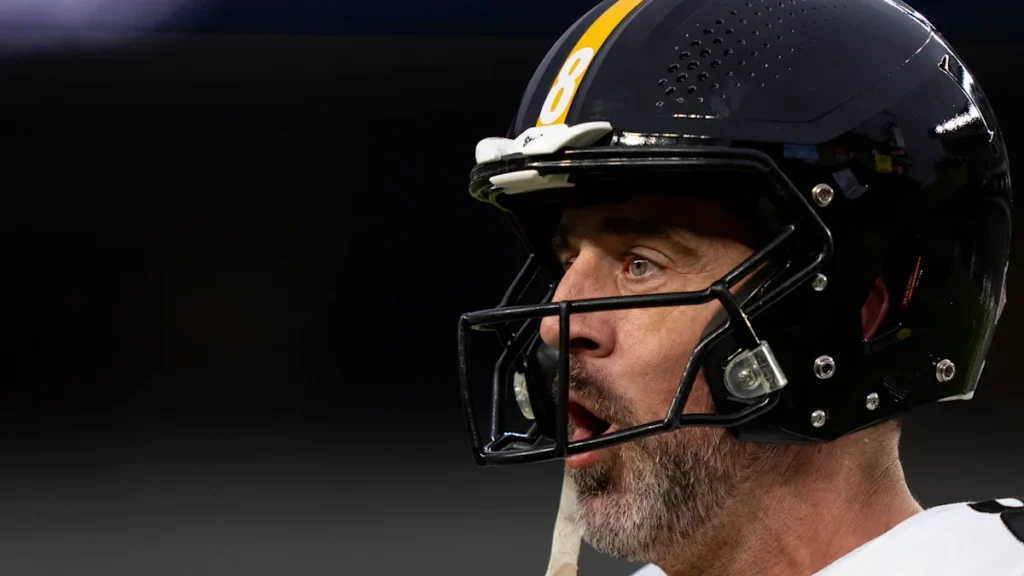

The Pittsburgh Steelers have officially benched Aaron Rodgers, turning to backup Mason Rudolph as the starting quarterback for the remainder of the season. This decisive roster move marks a pivotal turning point for the franchise, which currently holds a 6-4 record. While Rudolph boasts an impressive 8-5-1 career record as Pittsburgh’s starter, the significance of the change lies less in his immediate statistical superiority and more in the organization’s willingness to disrupt a winning team’s status quo. By making this switch, the Steelers have signaled that they are no longer content to coast on past glory or familiar faces, prioritizing competitive urgency over legacy.
Pittsburgh’s bold move signals a franchise no longer willing to settle for mediocrity.
Rodgers, now 42, has faced significant struggles this year, posting career-low metrics as a starter with a 4.4% touchdown rate and 6.2 yards per attempt. These numbers starkly contrast with his once-effortless leadership, which has recently been overshadowed by visible frustration on the field. Observers and analysts have increasingly questioned whether Rodgers remains the right fit for the Steelers at this stage of his career. The decision to bench him reflects a growing consensus that the team’s previous reliance on patience—exemplified by head coach Mike Tomlin’s 19 seasons without a losing record—has reached its limit, especially given the lack of sustained success in recent years.
This personnel change represents a fundamental shift in the Steelers’ culture, moving away from a defensive-heavy identity that often allowed the offense to stagnate. The fan base, long vocal about its discontent with the team’s tendency to “sit with the familiar,” has found validation in this aggressive strategic pivot. By replacing a veteran icon with a proven, younger alternative, Pittsburgh is betting on a new era of accountability and offensive vitality. The move underscores a clear message: the Steelers are ready to risk short-term disruption for long-term competitive relevance, ending an era of complacency and embracing a more dynamic, results-driven approach to quarterback play.
Source: Yahoo Sports