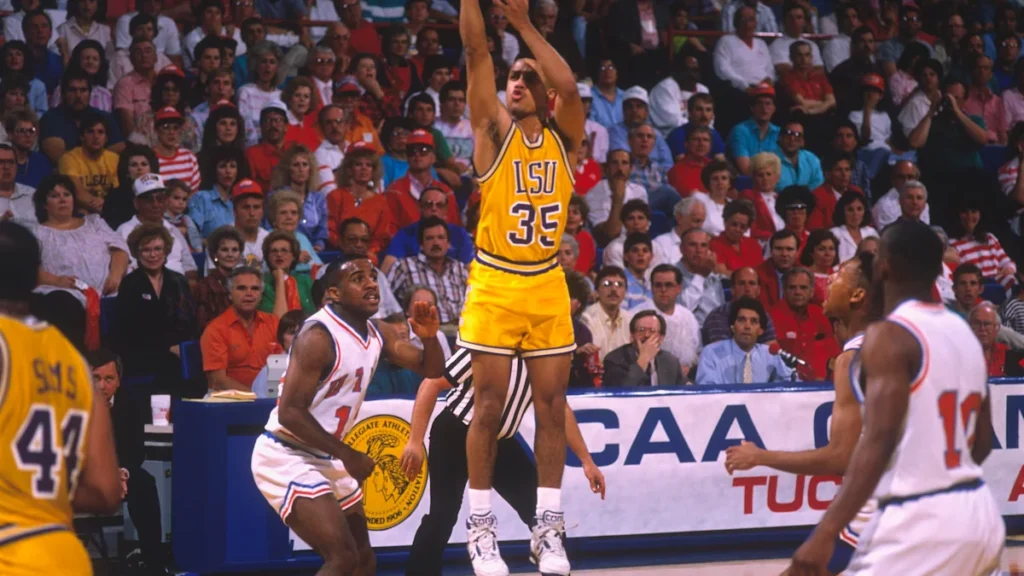

The 1989-90 LSU Tigers squad represents a singular anomaly in college basketball history, assembling a roster so densely packed with elite talent that it defies modern parity. The foundation was laid by Stanley Roberts and Chris Jackson, who arrived in 1988, before Shaquille O’Neal joined the fold a year later. This convergence created a frontcourt and backcourt combination that overwhelmed opponents, establishing the program as the dominant force in the SEC and a national powerhouse. The sheer volume of star power on the floor made this era a definitive highlight reel for basketball fans, capturing the peak of the Tiger basketball dynasty.
How Shaq, Roberts, and Jackson formed the most stacked roster in college basketball history
Chris Jackson, in particular, offers a fascinating study in raw athletic ability overcoming physical limitations. Standing just 6-foot-1 and weighing approximately 160 pounds, Jackson possessed a 42-inch vertical leap and a shooter’s touch that belied his stature. However, his career was defined by a battle with Tourette’s syndrome, a neurological condition characterized by involuntary motor and vocal tics. Jackson’s symptoms included violent arm-flinging movements and intense body twitches that caused significant physical pain, including neck injuries and the sensation of his brain hitting his skull. Despite these debilitating challenges, his on-court brilliance remained undeniable, adding a layer of profound human interest to the team’s statistical dominance.
The legacy of this trio extends far beyond the 1989-90 season, influencing how the sport values versatility and resilience. While Shaquille O’Neal’s legacy is cemented as one of the most iconic players of all time, the contributions of Roberts and Jackson often go underappreciated in mainstream retrospectives. Roberts, who was nearly as physically imposing as O’Neal, provided crucial size and skill, while Jackson’s ability to perform at an elite level despite severe neurological challenges serves as a testament to his mental fortitude. For modern audiences, revisiting this era through archival footage provides a rare glimpse into a period where individual genius collectively elevated a team to legendary status, offering a stark contrast to the current state of the program.
Source: Yahoo Sports