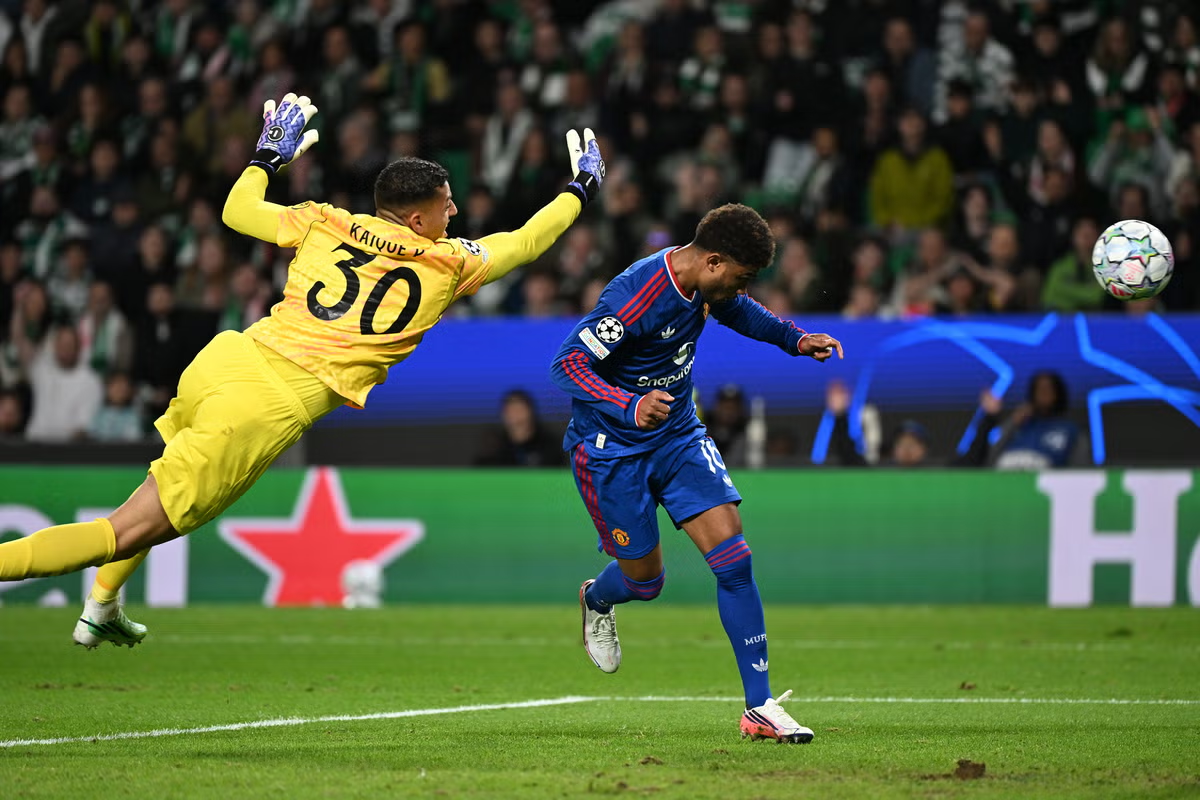

Manchester United’s hopes of securing a vital away point at Sporting CP were dashed when Amad Diallo’s late equaliser was disallowed for a foul in the build-up. The Red Devils’ winger appeared to have headed the ball into an empty net after Sporting goalkeeper Kaique Pereira saved his initial shot. However, the goal was overturned after referee Szymon Marciniak determined that Youri Tielemans had committed a foul on Goncalo Inacio while sliding to poke the ball through to Diallo. The decision sparked immediate frustration among the United camp, who argued the challenge was benign and did not warrant stopping play.
Key Match Highlights & Tactical Analysis
The technical nuance of the incident lies in the timing of the referee’s whistle. Because Marciniak blew the whistle to stop play immediately following Tielemans’ challenge, the ball was officially dead before Diallo’s header. Consequently, Video Assistant Referees (VAR) were unable to intervene or review the incident for a potential penalty or foul, as the play had already ceased. This strict interpretation of the laws of the game meant that even if the challenge was deemed accidental or minor, the sequence of events was invalid from the moment the whistle blew.
This incident highlights the critical importance of timing in modern football officiating. For Manchester United, the disallowed goal represents a significant missed opportunity in a competitive fixture, underscoring how split-second decisions by match officials can alter match outcomes. As the Premier League side continues its European campaign, this ruling serves as a stark reminder that technical fouls in the build-up phase can negate even the most decisive finishing efforts, leaving teams with little recourse once the whistle has been blown.
Source: The Independent Sport