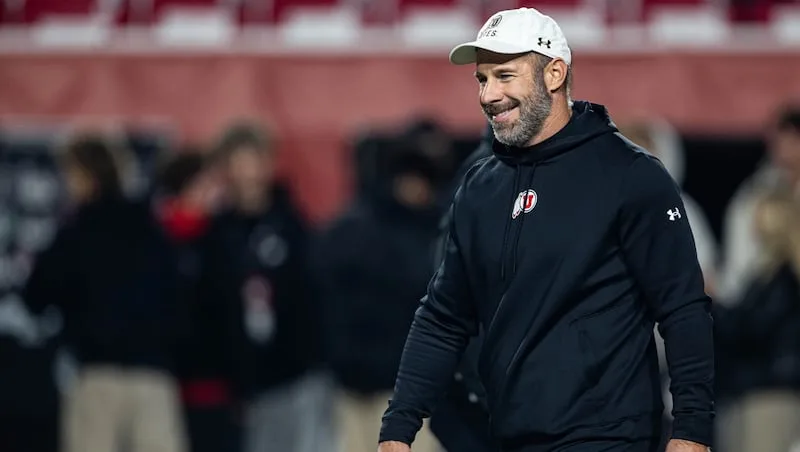

Utah head coach Morgan Scalley and his staff meticulously analyzed Houston’s defensive tendencies, identifying significant gaps in the Cougars’ coverage that allowed quarterback Devon Dampier to exploit open running lanes. This strategic preparation paid off immediately, as Dampier capitalized on the defensive lapses to rush for 150 yards and two touchdowns, securing a decisive 21-13 victory for the Utes. Dampier emphasized the team’s adaptive approach, noting that the coaching staff explicitly instructed him to take advantage of visible opportunities during dropback passes, a tactic that proved highly effective against Houston’s scheme.
How film study and analytics combined to drive the Utes’ 21-13 victory
Beyond the immediate tactical adjustments, Scalley relies on a robust analytical framework to predict long-term team success. Having studied elite college football programs over the past two decades, the coach has identified specific statistical indicators that correlate strongly with winning seasons. While scoring offense and defense remain the primary metrics for evaluating team performance, Scalley’s deeper dive into historical data reveals additional critical factors that often distinguish top-tier contenders from the rest of the conference, providing a data-driven roadmap for Utah’s development.
The integration of qualitative film study and quantitative analytics defines the modern approach to college football preparation. By combining the “eye test” with predictive statistics, Scalley ensures that Utah is not only reacting to immediate defensive weaknesses but also positioning the team for sustained competitive advantage. This dual focus allows the Utes to maximize their offensive output while maintaining a disciplined, evidence-based strategy that targets the most impactful areas for improvement throughout the season.
Source: Yahoo Sports