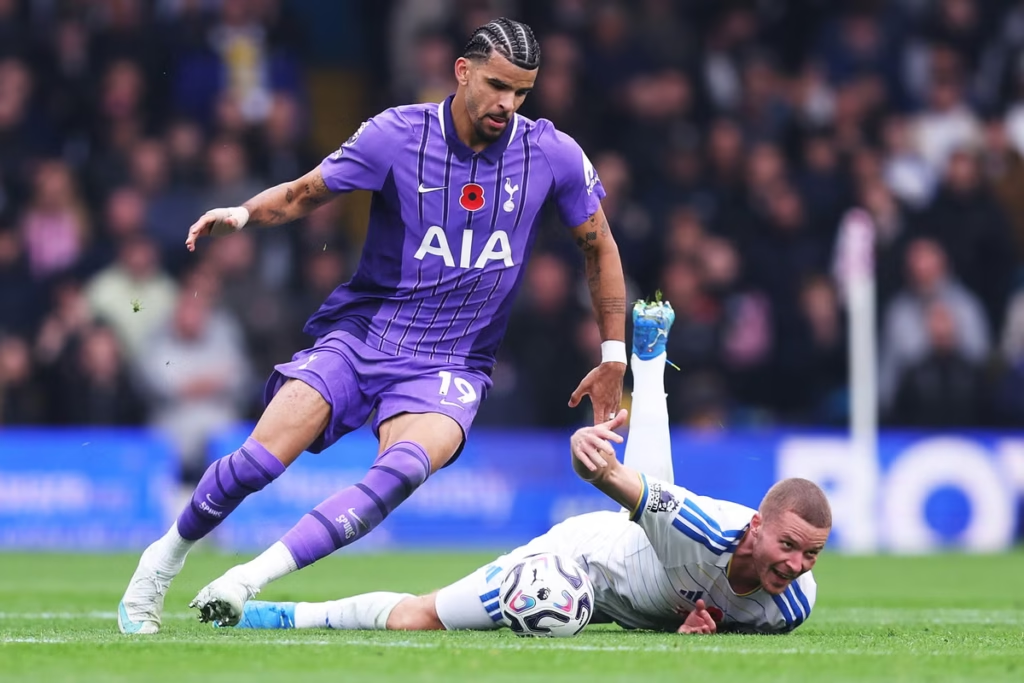

Roberto De Zerbi’s Tottenham Hotspur side arrived at Elland Road riding a wave of three consecutive victories, yet they departed with a stark lesson in resilience. The manager explicitly cited a lack of “character, personality, and courage” as the defining deficits in the second half, suggesting that technical execution alone was insufficient to secure a result against a determined Leeds United. This psychological gap exposed a fragility in the squad’s mental fortitude, proving that momentum from prior wins does not automatically translate into tactical dominance or defensive solidity when pressure mounts.
Analysis of why character, courage, and clinical finishing failed against Leeds United
While scrutiny often falls on the forward line, specifically the left winger, right winger, and center-forward roles, the issue extends beyond individual failure. Mohammed Kudus, a high-value talent still integrating into the system, and Mathys Tel, who was substituted early due to a concerning injury, were not the sole architects of the stalemate. The criticism of the attack is partially mitigated by context; however, the inability to convert pressure into goals highlights a broader systemic issue where Spurs’ offensive creativity stalled completely, failing to generate meaningful threat despite their previous scoring record.
The statistical context underscores the severity of the performance dip. Prior to this match, Tottenham had scored seven goals in three games, yet against Leeds, their attack was described as a “powderpuff” effort that barely registered. This stark contrast indicates that the “missing piece” is not merely a tactical adjustment but a fundamental shift in competitive intensity. De Zerbi must now determine whether this is a temporary dip in form or a deeper structural flaw that requires immediate reinforcement in both personnel and mindset to prevent further stagnation in the Premier League.
Source: The Independent Sport