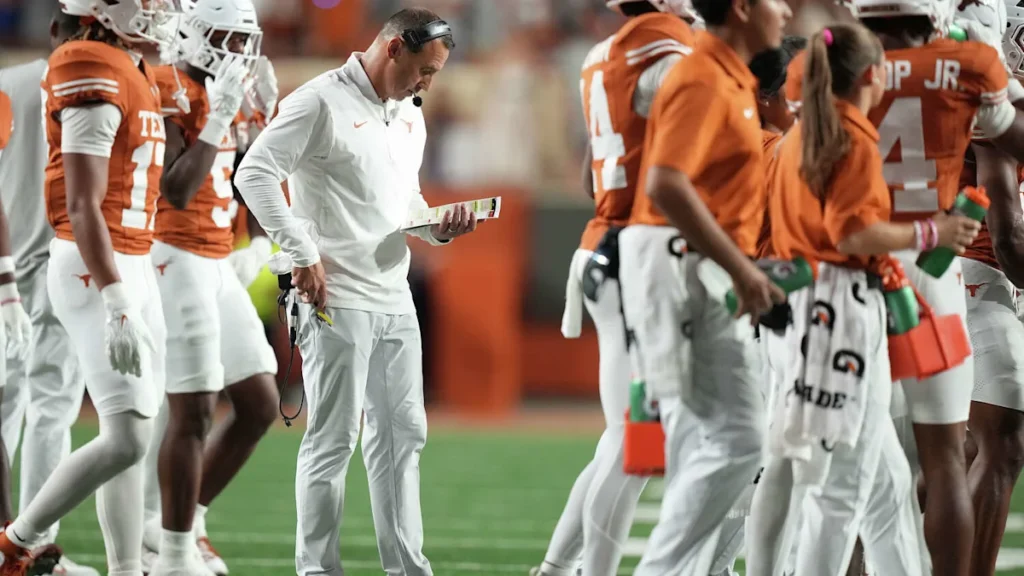

The Texas Longhorns have entered every one of their four SEC contests with a halftime lead, yet they have failed to convert those advantages into decisive victories. Despite holding the scoreboard advantage when the band played, Texas (5-2, 2-2 SEC) has suffered two losses and secured only two narrow wins that hinged on last-second heroics. This pattern highlights a critical vulnerability: the team’s inability to maintain momentum through the third quarter, a period that often dictates the final outcome in high-stakes college football.
Key Match Highlights & Tactical Analysis
Statistical analysis reveals a stark collapse in offensive production during the third period. Across four SEC games, Texas has been outscored by a lopsided 31-3 margin, with the sole points coming in a September 26 matchup against Tennessee. The ground game has been particularly ineffective, averaging just 0.8 yards over 30 third-quarter rushes, five of which resulted in sacks. Quarterback Arch Manning has completed only 10 of 20 passes for 103 yards during these stints, while the offense managed just six first downs, punted 10 times, and committed one turnover.
These third-quarter struggles stand in sharp contrast to the team’s overall offensive efficiency, where the Longhorns average 25.5 points per game. The disparity suggests that SEC defenses are successfully adjusting their schemes to neutralize Texas’s early-game rhythm, forcing the offense into predictable, low-yield situations. For head coach Steve Sarkisian and the coaching staff, solving the third-quarter stagnation is no longer optional; it is the primary key to transforming promising halftime leads into consistent conference victories.
Source: Yahoo Sports