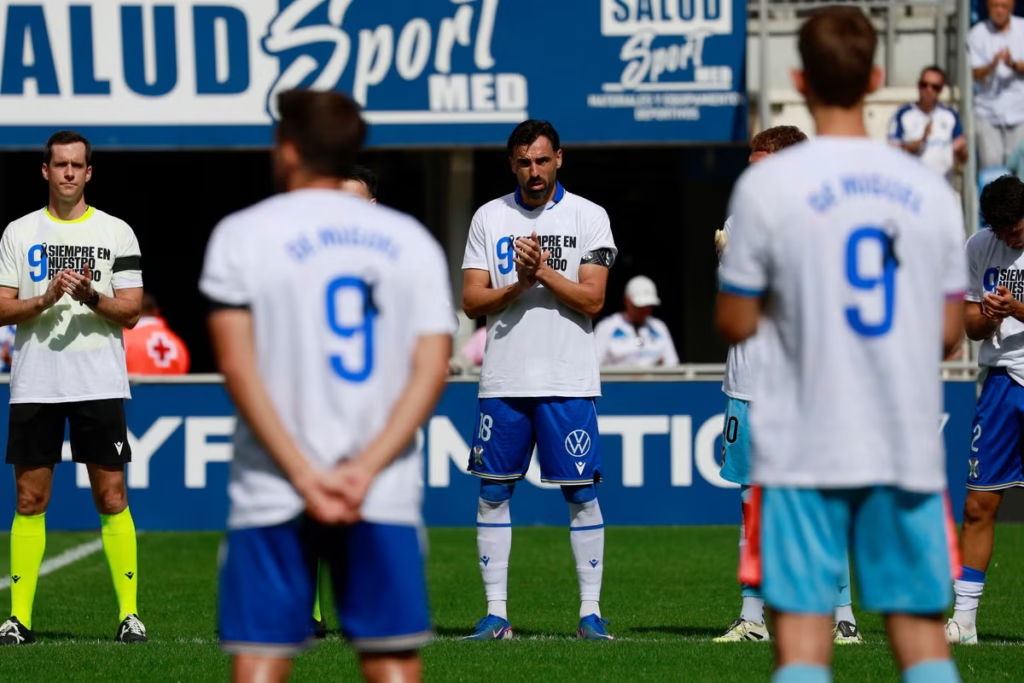

CD Tenerife returned to competitive football on a somber note, paying a profound tribute to striker Jesus de Miguel in their first match since his tragic passing. De Miguel, who died in hospital on 4 November following a collision with Andorra goalkeeper Jesus Owono during a Spanish second-tier fixture on 3 November, was honored with a pre-match ceremony that united the entire football community. Players from both Tenerife and visiting side Ceuta, along with the match officials, took the field wearing special “De Miguel 9” shirts and black armbands. A wreath was laid on the pitch before a minute of silence, which was met with a standing ovation from the emotional crowd, signaling a collective moment of grief and respect.
Players, officials, and fans unite in solemn minute of silence as La Liga 2 returns to action.
The tribute extended beyond the pre-match rituals, with play paused in the ninth minute to allow for a further round of applause and the display of a video montage of De Miguel on the stadium screens. This specific pause mirrored the protocol adopted across all first and second-tier games in Spain during the previous weekend, ensuring that the memory of the 25-year-old was honored uniformly across the league. The atmosphere inside the Heliodoro Rodriguez Calzada stadium was palpably heavy, with fans and players alike sharing in the sorrow, transforming a standard league fixture into a significant memorial event for the club and the wider footballing world.
This emotional return marks a pivotal moment for Tenerife as they seek to channel their collective grief into competitive focus. The incident has sparked ongoing discussions regarding player safety and collision protocols in Spanish football, yet the immediate response from the league and clubs has been one of unity and remembrance. As the match proceeded, the players carried the weight of the tribute, aiming to honor De Miguel’s legacy through their performance on the pitch. The event serves as a stark reminder of the human element in professional sports, where personal tragedy can momentarily overshadow the competitive narrative, demanding a pause for reflection and solidarity.
Source: The Independent Sport