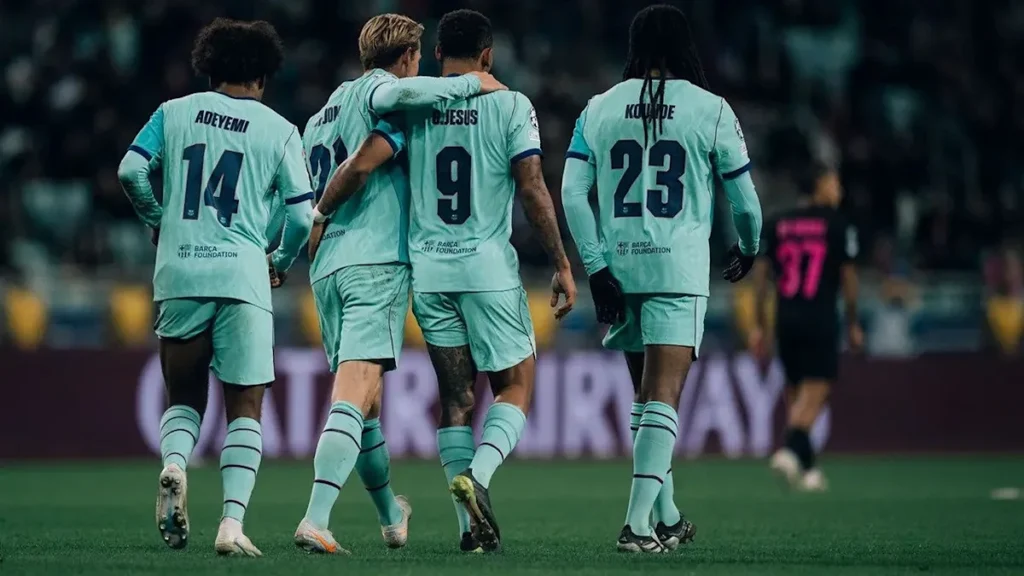

Hansi Flick’s Barcelona delivered a decisive statement of attacking depth following their 4-1 Champions League victory over Sabah in Azerbaijan. With star winger Lamine Yamal absent and Raphinha starting on the bench, the manager relied on a rotated front line that refused to falter. The absence of primary targets did not dampen the offensive output, as the team maintained its high-intensity pressing and fluid movement, securing their fourth win in five league phase matches and reinforcing their status as a top-tier European contender.
Key Match Highlights & Tactical Analysis
The statistical breakdown of this campaign highlights a systemic transformation in how Barcelona generates goals. The club has now reached 69 goals across just 18 official matches, translating to an impressive average of 3.83 goals per game. This volume is not driven by a single superstar but by a collective effort, evidenced by the recent match where Anthony Gordon scored twice, while Karim Adeyemi and Gabriel Jesus added further strikes in a five-minute burst after the break. The ability to score from multiple sources ensures that Barcelona remains unpredictable and difficult to defend against, regardless of individual absences.
This data confirms that Flick’s tactical overhaul has successfully diversified the team’s scoring threat. By reaching nearly four goals per match, Barcelona has established a new benchmark for consistency in front of goal. The reliance on a rotating cast of attackers, rather than a fixed trio, provides the squad with the resilience needed for a deep Champions League run. As the season progresses, these numbers suggest that Barcelona’s attacking engine is not just powerful but sustainable, capable of maintaining high output even when key players are rested or unavailable.
Source: Yahoo Sports