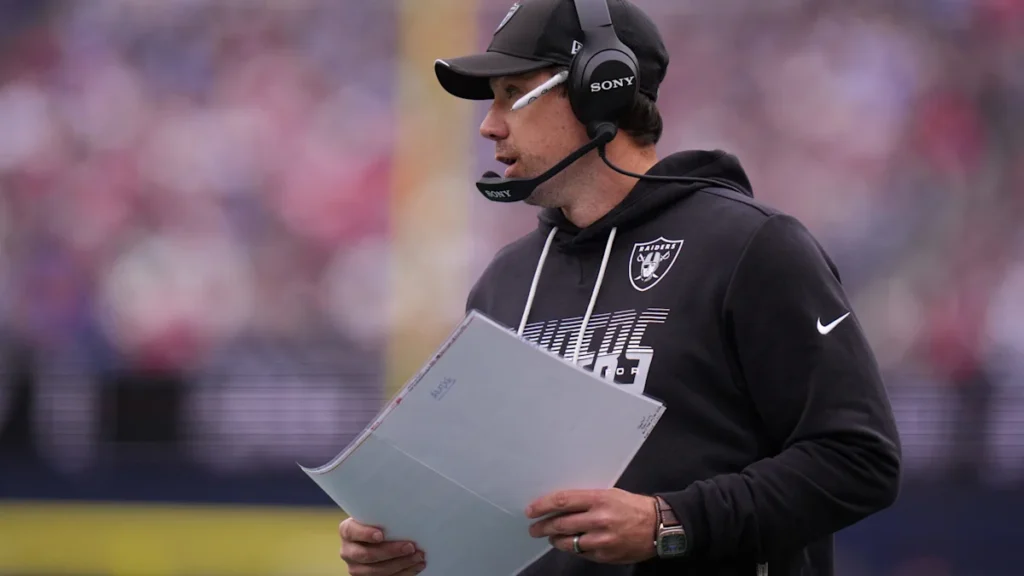

Las Vegas Raiders head coach Klint Kubiak has officially scrapped any notion of a stable running back hierarchy, declaring that the backfield workload will be determined solely by “who’s playing the best ball at the time.” This fluid approach has transformed the Raiders’ RB room into a high-risk gamble for fantasy football managers, as the team refuses to commit to a primary starter or a strict usage split. The lack of a defined pecking order means that any manager rostering Ashton Jeanty, Mike Washington Jr., or both is navigating a situation where weekly usage can shift drastically without warning, making long-term roster planning nearly impossible.
Key Match Highlights & Tactical Analysis
The volatility of this committee was starkly illustrated in Week 8, where the Raiders executed a drastic tactical pivot. Mike Washington Jr. dominated the ground game with 25 carries for 83 yards, while highly touted rookie Ashton Jeanty was limited to just two rushing attempts. Despite the minimal rushing volume, Jeanty remained a valuable asset in the passing game, catching three passes for 64 yards. This extreme disparity in workload highlights the team’s willingness to alter game plans mid-season based on immediate performance, leaving fantasy owners with little data to rely on for future projections.
For fantasy managers entering Week 9, the Raiders’ backfield represents one of the most difficult situations to navigate in the NFL. The uncertainty surrounding who will secure the majority of touches forces owners to make high-stakes waiver wire and lineup decisions with minimal clarity. Rather than banking on a consistent starter, managers must now monitor practice reports and weekly game plans closely, as the Raiders’ commitment to a merit-based workload ensures that the RB1 spot could change from one Sunday to the next, creating a persistent nightmare for those seeking stability in their rosters.
Source: Yahoo Sports