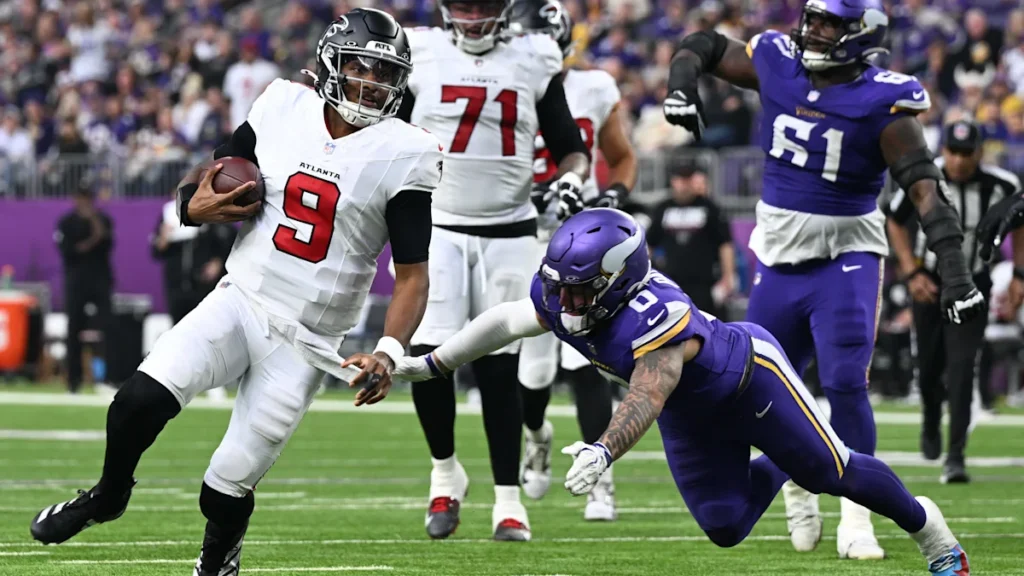

The Atlanta Falcons’ 28-14 defeat against the Minnesota Vikings on Sunday marked their sixth loss in the last seven games, cementing a grim reality for a franchise enduring the NFL’s second-longest active playoff drought. Now sitting at 3-8, the team appears destined to extend its postseason absence to nine consecutive seasons, a stark contrast to the “remarkable patience” the organization has displayed since installing head coach Kevin Stefanski. While the new leadership group, including President of Football Matt Ryan and GM Ian Cunningham, has prioritized long-term stability over quick fixes—evidenced by the trade of safety Jessie Bates III to Jacksonville—the recent slide suggests that the current trajectory is failing to yield competitive results.
A 28-14 loss to Minnesota exposes the limits of patience for Atlanta’s young signal-caller.
At the heart of this struggle is quarterback Michael Penix Jr., whose performance against former teammate Kirk Cousins highlighted significant volatility. Penix initially appeared quick-triggered and resilient, but the game ultimately exposed a lack of consistency that has plagued the Falcons’ offense all season. Facing a disciplined Vikings defense, Penix’s decision-making under pressure wavered, contributing to a game where Atlanta could not sustain drives or protect a lead. This matchup served as a litmus test for the young signal-caller, revealing that while his physical tools are evident, his mental processing and game management require urgent development to compete at the NFL level.
The central mission of this season was to unwind the mistakes of the previous regime by avoiding the temptation to “microwave” a contender. However, Sunday’s performance urges the Falcons toward a necessary turning point in their quarterback strategy. With the team looking like a certainty for another year out of the playoffs, the organization must decide whether to continue investing in Penix’s development or pivot to a different path. The lackluster performance in the NFC South, combined with the inability to close out games, signals that the restrained approach may need to be reevaluated if Atlanta hopes to break its historic playoff drought.
Source: Yahoo Sports