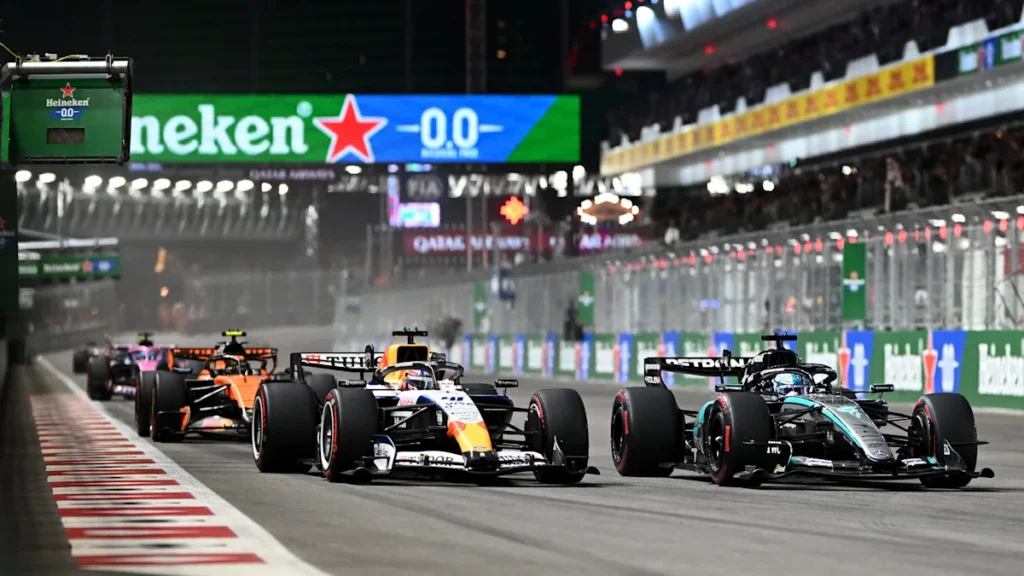

Arvid Lindblad described the Las Vegas Grand Prix as a surreal experience, likening the driving conditions to “putting an F3 engine in an F1 car.” The Racing Bulls driver noted that the artificial street circuit required a junior formula mindset, where precision and slipstream management were paramount over raw power. Although Lindblad started from a strong Top 5 position, his race ended in frustration after a spin left him empty-handed, mirroring the struggles of teammate Liam Lawson, who began the race a lap down due to a pre-race technical issue.
Key Match Highlights & Tactical Analysis
Despite the disappointing result, Lindblad acknowledged the unique competitive landscape of the event, crediting Mercedes with fielding a “rocket ship” as George Russell demonstrated superior pace. He highlighted how the slipstream factor became the decisive element in the Grand Prix, allowing drivers to stay with the leading pack despite the limitations of the Red Bull Ford power unit. This dynamic contrasted sharply with the typical dominance seen in other venues, creating a rare scenario where the outcome remained uncertain until the final moments.
Reflecting on the broader state of the sport, Lindblad expressed disappointment that 90% of current F1 races are effectively decided by Turn 2. Speaking at the Qatar Grand Prix, he argued that it is a “shame” that an hour-and-a-half-long race often lacks meaningful on-track action after the first 30 seconds. However, he praised the Las Vegas event for breaking this trend, stating it was “pretty cool for the sport to not know who’s going to win until the last lap,” offering a glimpse of the competitive racing fans crave.
Source: Yahoo Sports