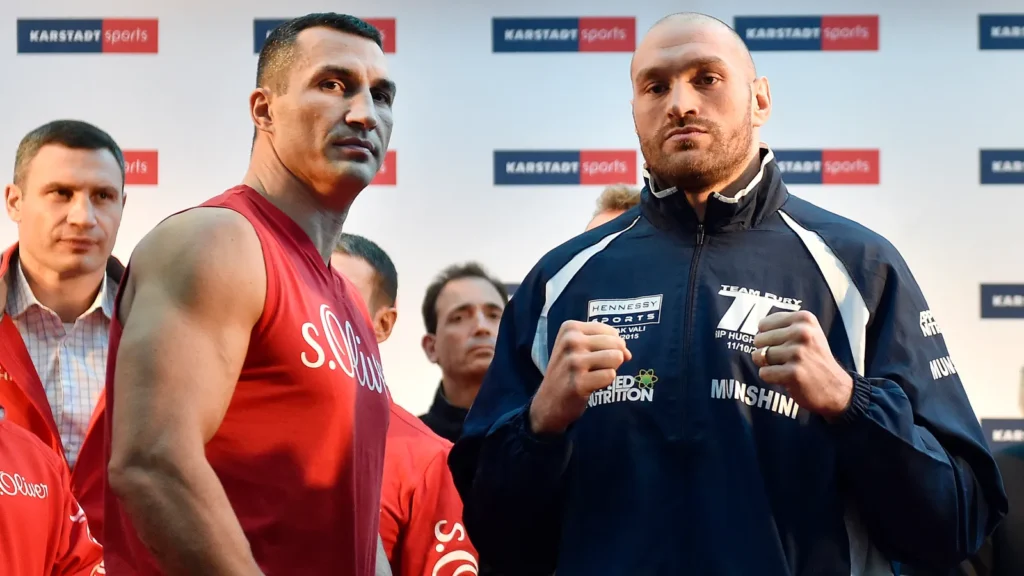

Tyson Fury’s historic dethroning of Wladimir Klitschko on November 28, 2015, remains one of the most significant upsets in heavyweight boxing history, yet the victory was nearly lost before the first bell even rang. While Fury ultimately secured the unified WBO, IBF, and WBA world heavyweight championships in Dusseldorf, the event was on the brink of cancellation due to an explosive dispute over the ring surface. This critical issue threatened to scuttle the contest entirely, creating immense tension in the hours leading up to the main event at the Esprit Arena.
Key Match Highlights & Tactical Analysis
The controversy escalated when Vitali Klitschko, acting as his brother’s cornerman and promoter, weighed in on the condition of the canvas, arguing it was unsafe for the fighters. This confrontation highlighted the fragile nature of high-stakes commercial boxing, where logistical details can overshadow athletic preparation. Fury, who had traveled to Germany as the underdog against a champion who had dominated the division for a decade, faced the dual pressure of performing against a stadium crowd and navigating a potential walkout that would have left him without a title shot.
Despite the chaos, Fury remained focused on his primary objective: unraveling the “Klitschko machine.” He executed his game plan with precision, using his reach and footwork to dismantle the once-untouchable champion. The successful resolution of the canvas row allowed the fight to proceed, resulting in a decisive victory for Fury that not only ended Klitschko’s reign but also cemented Fury’s status as a heavyweight king. This incident serves as a reminder that in elite sports, the path to glory is often paved with unexpected obstacles that require both athletic and mental resilience to overcome.
Source: Sky Sports