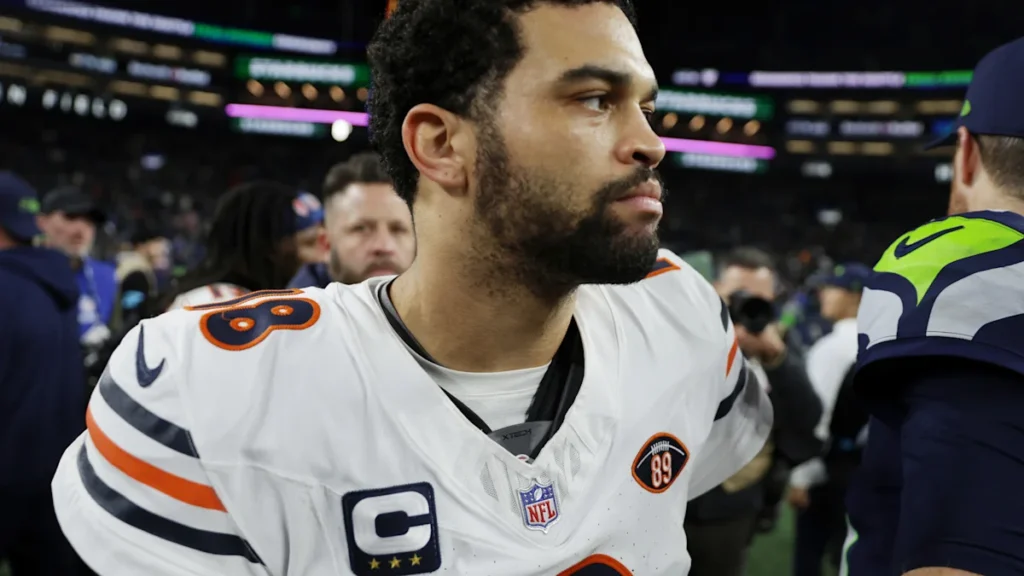

The Chicago Bears’ passing game has finally found its long-awaited rhythm, silencing early-season doubts about quarterback Caleb Williams’ connection with his primary targets. After weeks of inconsistency, the offense now moves the ball with greater speed and precision, a shift that head coach Ben Johnson immediately recognized following the team’s recent three-game winning streak. Speaking at Halas Hall on Wednesday, Johnson noted that the operation feels significantly smoother, stating, “I think our passing game in general has been a little bit cleaner.” This improvement stems from enhanced timing and mutual trust between Williams and his receivers, marking a decisive turning point for the offense.
How trust and timing transformed Chicago’s aerial attack into a league-leading force
Statistical evidence underscores the effectiveness of this new dynamic. Through eight games, Williams’ top three targets—Luther Burden III, Colston Loveland, and Rome Odunze—have combined for 1,324 of the team’s 2,031 passing yards, accounting for nearly two-thirds of the aerial production. The trio has also accounted for five of the eight passing touchdowns the Bears have scored this season. This concentration of volume and scoring highlights how critical the “Big 3” has become to Chicago’s offensive identity, transforming them from individual threats into a cohesive, high-efficiency unit.
The distribution of targets changed drastically once Williams returned from his hamstring injury, signaling a renewed confidence in his decision-making. In the last three weeks, the trio’s target count rose from 19 against Atlanta to 24 against Seattle, a spike that indicates Williams is no longer hesitating on the field. Per Yahoo Sports, this increase demonstrates that the quarterback is actively finding his best players and getting them the ball in high-leverage situations. As the Bears continue their winning streak, this unlocked chemistry suggests the offense is poised for even greater success in the second half of the season.
Source: Yahoo Sports