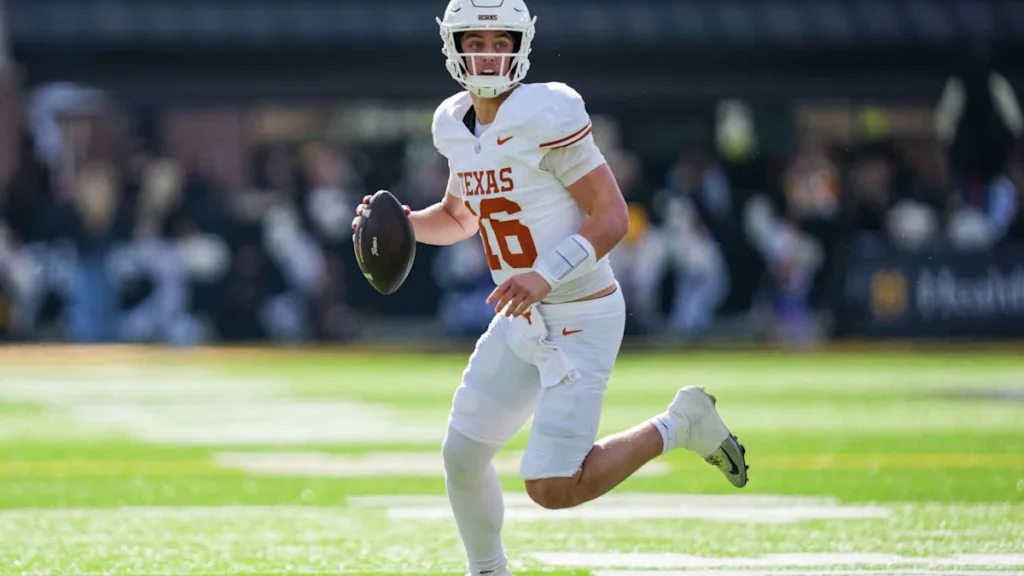

Texas football secured a crucial lifeline late in the third quarter against Missouri, thanks to a baffling officiating decision that defied standard NFL and college football rules. Trailing 20-13 at Memorial Stadium, the Longhorns faced a critical third-and-10 at the Missouri 39-yard line. Arch Manning’s arm was struck during an attempted throw, causing the ball to drop approximately 20 yards downfield. Instead of whistling the play dead for an incomplete pass, officials allowed the action to continue, resulting in a recovered fumble by the offense. The on-field call survived replay review, silencing the Missouri crowd with a mix of confusion and frustration as the Longhorns retained possession.
Key Match Highlights & Tactical Analysis
The strategic impact of the “strange fumble call” was immediate and decisive. Three plays after the controversial recovery, Manning capitalized on the extended drive, launching a 25-yard touchdown pass to wide receiver Jermaine Bishop. This strike tied the game at 20-20, shifting the momentum in Texas’s favor during a high-stakes SEC showdown. The sequence highlights the fine line between a lucky break and a pivotal play, as the Longhorns avoided a turnover on downs that would have likely sealed Missouri’s lead in the third quarter.
Contextualizing the officiating controversy, Texas had previously suffered from a different ruling in the second quarter. The Longhorns appeared to strip the ball from Missouri wide receiver Cayden Lee near the 35-yard line, but officials awarded forward progress to Lee rather than a fumble. This inconsistency in enforcement—denying a turnover in the second quarter while granting a recovered fumble in the third—underscores the subjective nature of live officiating. For Manning and Texas, the late-game call provided the necessary breathing room to stay competitive, proving that even in a loss or a close contest, a single ambiguous decision can alter the trajectory of an entire season.
Source: Yahoo Sports