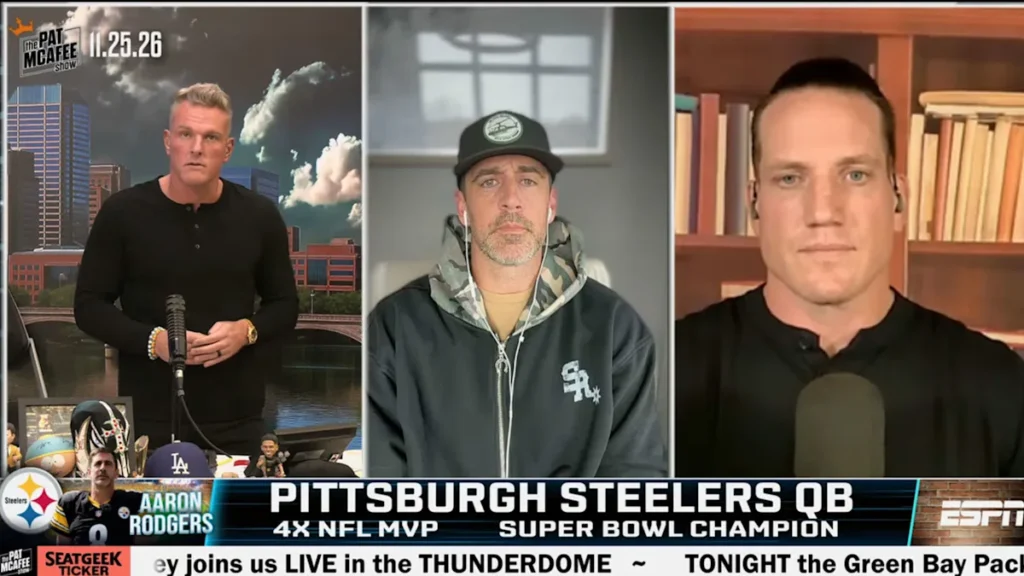

The Pittsburgh Steelers officially released quarterback Aaron Rodgers following a tense appearance on ESPN’s Pat McAfee Show, where the four-time MVP directly criticized head coach Mike McCarthy. Rodgers, who was benched in favor of backup Mason Rudolph for the Black Friday matchup against the Denver Broncos, used the platform to address the decision. The timing of the release, confirmed moments after his comments aired, signals a decisive end to the quarterback’s tenure with the franchise and underscores the zero-tolerance policy for public dissent within the locker room.
Key Match Highlights & Tactical Analysis
Rodgers enters this chapter as a Super Bowl champion and one of the most decorated players in NFL history, yet his recent struggles with the Steelers have raised questions about his fit within McCarthy’s system. The decision to start Rudolph for the high-profile Thanksgiving Eve game marked a significant shift in the team’s hierarchy, effectively sidelining the veteran signal-caller. This move not only altered the immediate game plan but also set the stage for the friction that ultimately led to Rodgers’ departure, highlighting the volatile nature of the relationship between the star player and the coaching staff.
The immediate release serves as a stark reminder of the power dynamics in professional sports, where on-air commentary can have instant contractual consequences. For the Steelers, the decision prioritizes organizational unity and control over the potential market value of a high-profile free agent. As the NFL continues to navigate the complexities of player autonomy and media engagement, this incident stands as a pivotal case study in how quickly reputational risks can translate into roster moves, leaving Rodgers to seek a new opportunity in the upcoming market.
Source: Yahoo Sports