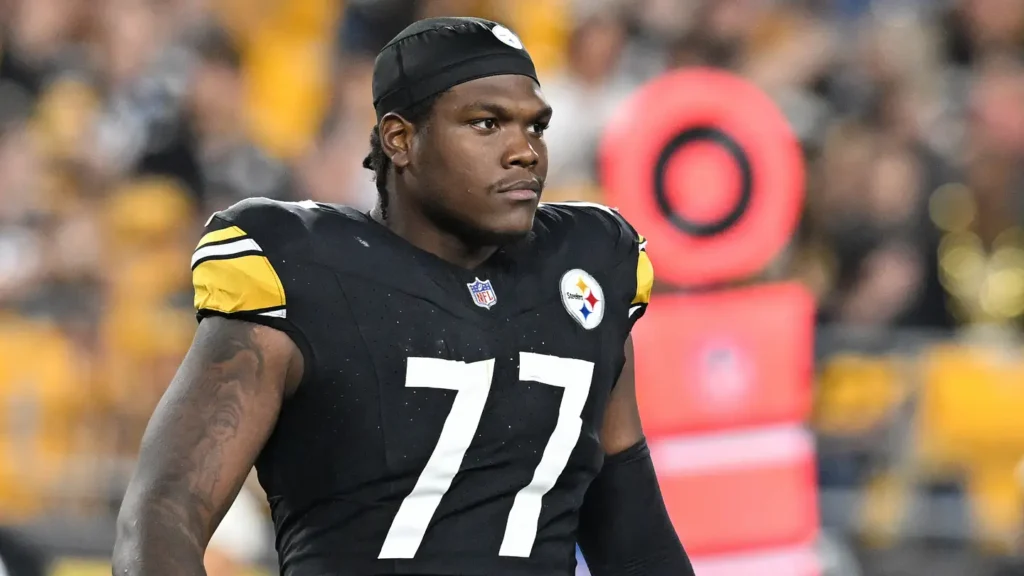

The Pittsburgh Steelers are rapidly emerging as the clear victors in the Broderick Jones trade, a move that initially surprised NFL insiders during the summer. Jones entered training camp competing for a starting left tackle role but failed to secure a roster spot, leading Pittsburgh to admit defeat on what has become the first major bust of the Omar Khan era. Rather than simply releasing the former first-round pick, the Steelers leveraged his remaining value, trading him to the Dallas Cowboys in exchange for a 2027 third-round pick and a sixth-round selection. This return represents a significant financial and asset recovery for a player who, due to a nagging neck injury and persistent weight management issues, was otherwise likely to be cut without compensation.
Key Match Highlights & Tactical Analysis
The trade details reveal a savvy maneuver by Pittsburgh, who also sent a 2027 fourth-round pick to Dallas. For the Cowboys, the acquisition was predicated on the belief that Jones was a “project player” with elite athleticism who would eventually translate his physical tools into high-level pass protection. However, early evidence suggests this assessment was flawed. Jones has struggled to find his footing in Dallas, failing to demonstrate the consistency required for a starting offensive lineman. His inability to maintain optimal weight throughout his career has hindered his development, leaving him unable to compete effectively at the next level despite his initial hype.
The situation now serves as a stark validation of the Steelers’ decision to move on from Jones. While Dallas is grappling with the reality that their new offensive tackle is underperforming, Pittsburgh has secured valuable future draft capital to offset the initial investment. The trade highlights the risks of drafting based solely on athletic potential without considering technical proficiency and durability. As Jones continues to struggle in Dallas, the Steelers’ quick exit from the contract looks less like a concession and more like a strategic correction, allowing them to rebuild their offensive line while retaining flexibility in the 2027 draft.
Source: Still Curtain