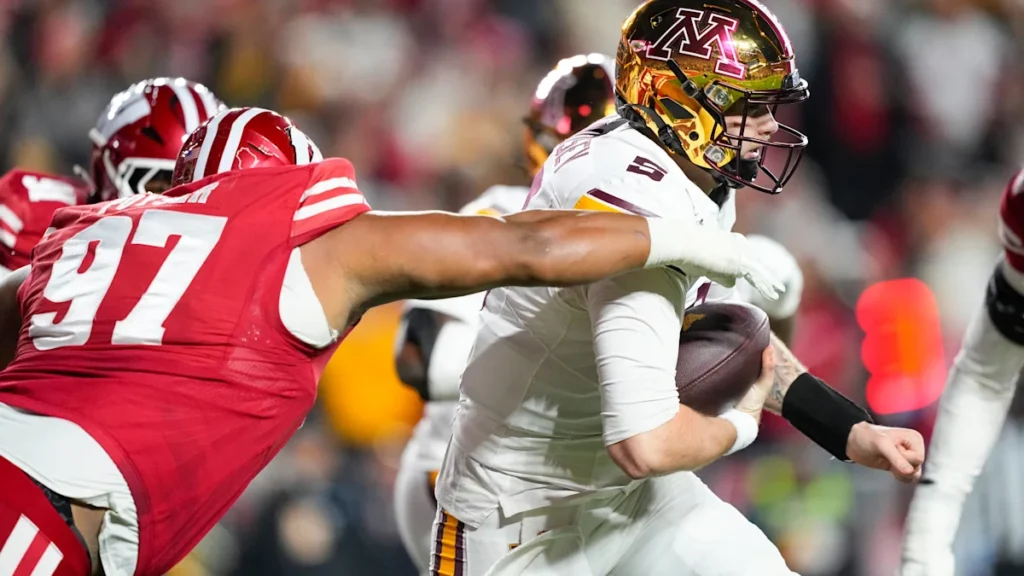

The Minnesota Gophers entered Friday’s matchup against Wisconsin hoping to replicate the offensive spark displayed in their final home game against Northwestern, but the team instead delivered one of its most sluggish first-half performances of the 2026 season. An early 21-3 deficit at the break placed the Gophers in a massive hole against the Badgers, underscoring a persistent inability to establish rhythm on the road. This latest stumble marks one of several poor first halves that have defined Minnesota’s recent trajectory, raising significant questions about the team’s preparation and execution away from home.
Key Match Highlights & Tactical Analysis
Offensively, the Gophers were outmatched and outgained 298-39, a stark contrast to their recent home form. Quarterback Drake Lindsey struggled mightily, completing just three of eight passes for 24 yards in the first half. The lack of production was symptomatic of a broader issue: Minnesota’s offense has failed to translate its home-field confidence into road success. Under head coach P.J. Fleck, the team’s tendency to start slow on the road has become a recurring theme, with the 2026 season potentially defined by these early deficits rather than the late-game heroics that characterized previous campaigns.
With the Gophers coming off a winless road record in 2025, the quartet of poor first halves in 2026 signals a dangerous trend that could limit the team’s ceiling. While the Badgers celebrated the Gophers’ struggles with a touchdown play mocking Fleck’s “Row the Boat” mantra, the focus now shifts to whether Minnesota can mount a second-half comeback. For a team aiming to compete at a higher level, overcoming these early-game deficits will be essential, as the current pattern suggests the Gophers are leaving too much on the table before the final whistle.
Source: Yahoo Sports