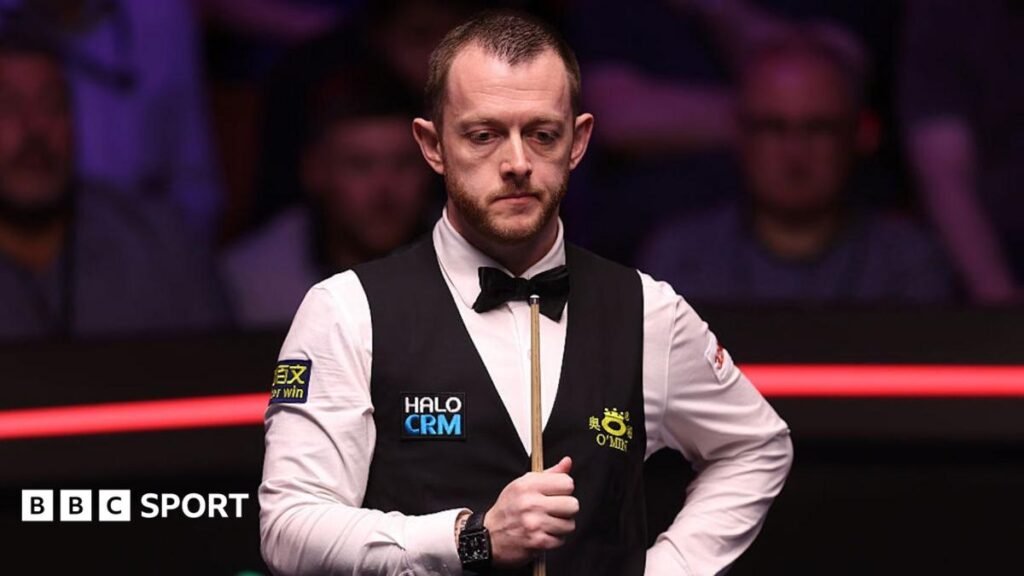

Mark Allen’s recent on-air admission that he is “just trying to survive” has exposed the raw, unfiltered psychological toll of elite snooker. The world number 11, speaking live on TNT Sports following his Northern Ireland Open exit, revealed he was in a “bad place” with no visible future in the game. This visceral moment, occurring shortly after his agonizing black-ball miss at the World Championship final qualifier, underscores a narrative often hidden behind the sport’s stoic exterior. Allen’s subsequent social media updates confirm he remains in a “major low,” illustrating how a single missed opportunity can trigger a profound identity crisis in a sport defined by isolation.
Mark Allen’s raw confession highlights the crushing psychological weight of elite billiards
Unlike team sports where pressure is distributed, snooker places the entire burden of performance on a single individual for hours at a time. The mental endurance required to maintain focus during a 147-point frame, while managing the silence of the arena and the scrutiny of global audiences, creates a unique psychological environment. Allen’s struggle is not an anomaly but a symptom of the sport’s structure; the lack of immediate physical exertion means the mind is the primary engine, making mental fatigue and existential doubt more acute. His previous statement that “there is more to life than just a career” resonates deeply here, as the sport demands total mental immersion that can leave players feeling hollow when results do not follow.
This incident serves as a critical case study for the broader conversation around athlete mental health in individual sports. While Allen has not explicitly linked his struggles to the game itself, the timing suggests a direct correlation between high-stakes failure and psychological distress. For fans and analysts, Allen’s transparency breaks a long-standing code of silence, highlighting that even the most decorated professionals face moments of existential crisis. As snooker continues to grow in popularity, addressing these unique mental health challenges will be essential to sustaining the careers of its elite players.
Source: BBC Sport