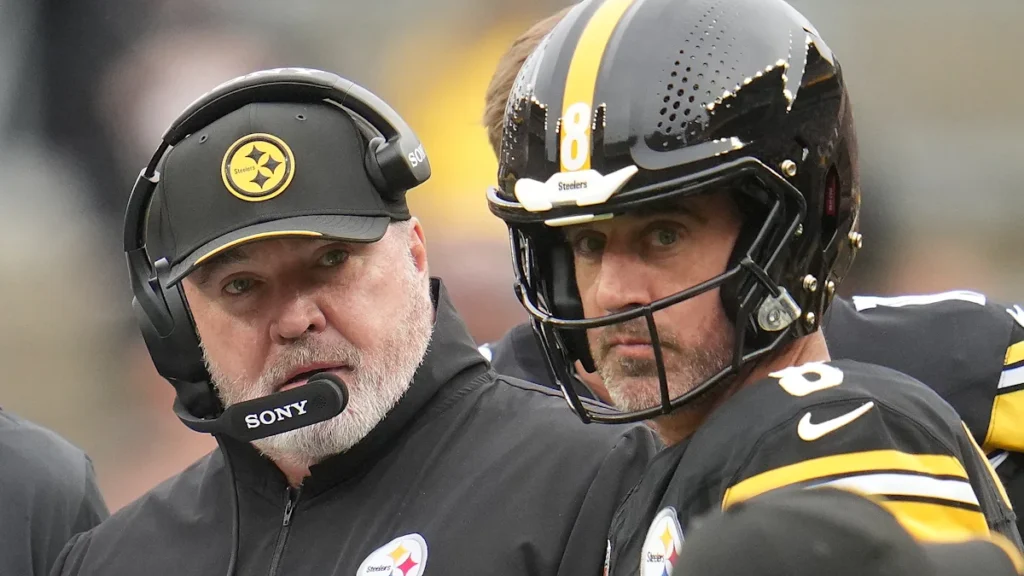

Aaron Rodgers delivered a career-defining media appearance on “The Pat McAfee Show,” systematically dismantling his former head coach, Mike McCarthy, in a manner unprecedented in NFL history. For over 30 minutes, the 41-year-old quarterback maintained a chillingly matter-of-fact tone while alleging that McCarthy slept during meetings, missed practices, and failed to build meaningful relationships with key players like Cameron Heyward and T.J. Watt. This stark contrast between the gravity of the accusations and Rodgers’ unemotional delivery shocked the sports world, marking a decisive break from the traditional player-coach dynamic.
Key Match Highlights & Tactical Analysis
The interview served as the final chapter in Rodgers’ transformation from a franchise cornerstone to the league’s ultimate rebel. By explicitly stating he did not care about the potential fallout, Rodgers neutralized the usual leverage teams hold over players. He noted that his reputation had already been damaged by past controversies, including his handling of the 2020 season, meaning the social cost of such a public airing of grievances was minimal. This strategic calculation allowed him to speak with a freedom that other active players, still seeking contract extensions or team goodwill, simply cannot afford.
This moment cements Rodgers’ legacy not just as a statistical powerhouse, but as a cultural disruptor who refused to accept the status quo. His willingness to sacrifice any remaining financial or reputational capital to tell his version of events highlights a growing trend of veteran players asserting their narratives. As the NFL continues to grapple with player autonomy, Rodgers’ scorched-earth approach serves as a warning to franchises: the era of unquestioned coaching authority is ending, and players are no longer afraid to hold the torch up to the dark corners of the locker room.
Source: Yahoo Sports