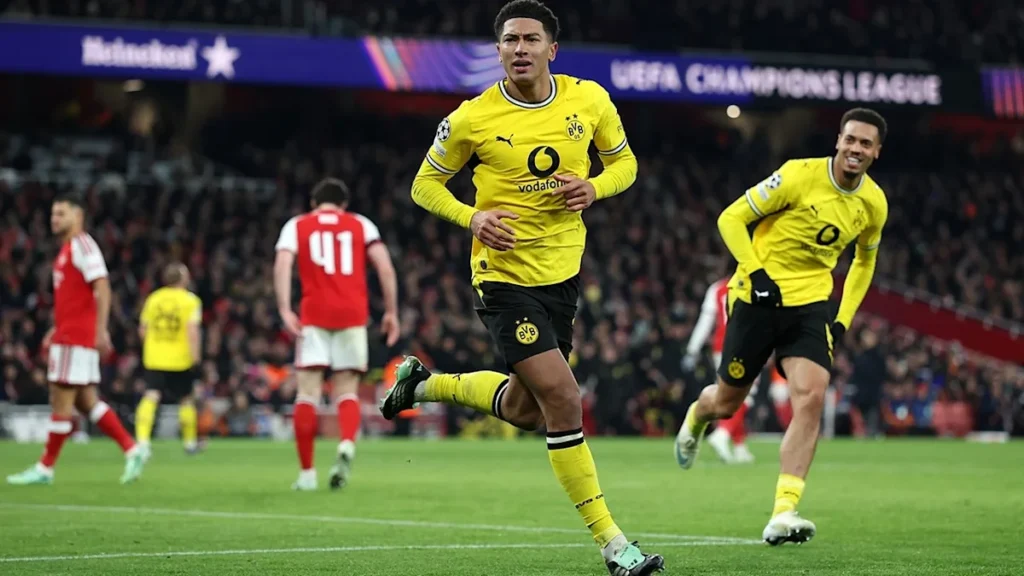

Jobe Bellingham delivered a masterclass in tactical adaptation during Borussia Dortmund’s tense Champions League clash with Arsenal, identifying and exploiting a critical vulnerability in the Gunners’ midfield structure. Playing 73 minutes, the German international did not merely participate; he dictated the tempo of the contest by recognizing that Arsenal’s defensive instructions left him with a significant physical advantage. While Mikel Arteta’s side aimed to control the game, Bellingham’s ability to win individual duels disrupted Arsenal’s rhythm, forcing the Premier League champions into reactive phases rather than allowing them to dictate the flow of play.
Key Match Highlights & Tactical Analysis
The core of Bellingham’s success lay in his matchup against young Arsenal defender Myles Lewis-Skelly, who was tasked with marking him. Bellingham quickly recognized that the size and strength differential would be decisive, particularly in aerial contests. Instead of engaging in ground-level scrambles where Lewis-Skelly’s agility might offer a chance, Bellingham focused on winning long balls and high crosses. This strategic shift allowed the Dortmund midfielder to bypass Arsenal’s low block and create dangerous opportunities, turning what was intended to be a defensive assignment for the Gunners into a persistent source of pressure.
Although Arsenal may view the draw as a missed opportunity to secure all three points, Bellingham’s performance highlights the resilience of Dortmund’s midfield engine. The German’s ability to manipulate the physical dynamics of the match ensured his team remained competitive throughout, preventing Arsenal from gaining the decisive edge they sought. As both sides battle for continental supremacy, this encounter serves as a reminder that technical brilliance must be paired with tactical awareness to neutralize elite opponents, a lesson Bellingham executed with precision against the league leaders.
Source: Yahoo Sports