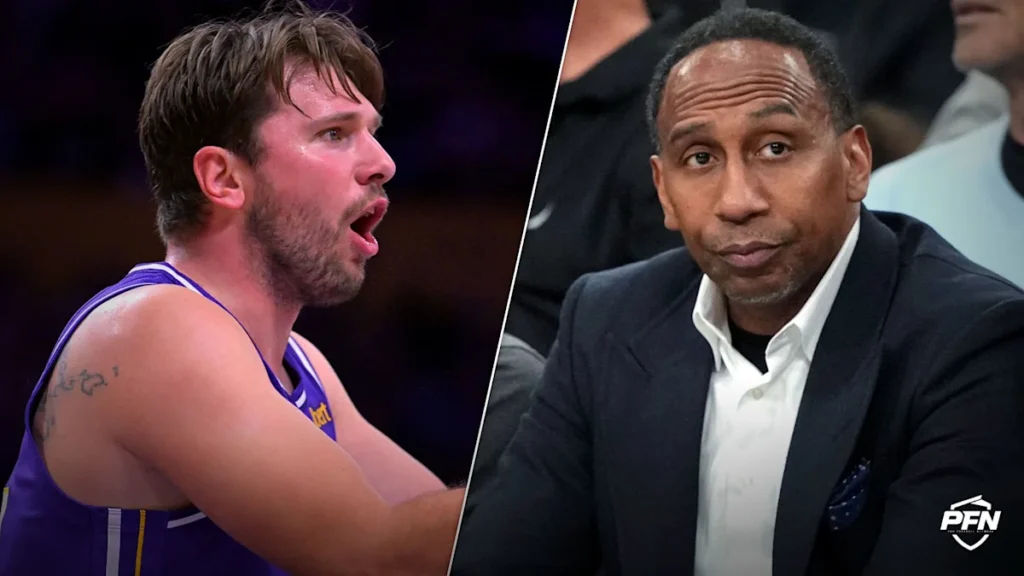

Stephen A. Smith has firmly rejected calls to retract his controversial remarks regarding the Los Angeles Lakers, asserting that “somebody had to say it” about the team’s unprecedented roster composition. The longtime ESPN analyst faced immediate scrutiny from media figures like Clay Travis and Jeff Pearlman after questioning whether other NBA stars would tolerate an LA squad built around Luka Dončić, Austin Reaves, and Walker Kessler. However, Smith maintains on his “Straight Shooter” podcast that he is “snitching” on the status quo by highlighting how the Lakers have successfully defied modern NBA norms, framing his comments as a direct compliment to the franchise’s strategic pivot in the post-LeBron James era.
The ESPN icon insists his comments were a compliment to LA’s historic 14-3 start.
The debate is grounded in undeniable statistical dominance, as the Lakers entered Monday tied for the best record in the league at 14-3. The team’s momentum is undeniable, having secured victories in 10 of their last 11 games, a run that has silenced early skeptics about their ability to compete without their former franchise cornerstone. Smith emphasized that the rarity of a team led by three white players achieving this level of success in the modern NBA is precisely why the narrative is significant. He argued that by debunking conventional wisdom about roster construction, the Lakers are not just winning games but fundamentally altering the competitive landscape of the Western Conference.
This standoff highlights the growing tension between traditional sports analysis and the increasingly polarized nature of social media discourse. While critics view Smith’s comments as racially charged, the analyst stands his ground, insisting the conversation is strictly about basketball mechanics and roster building. With the Lakers poised to challenge for a top seed, Smith’s defense of the team’s identity serves as a rallying cry for fans who see their squad as a legitimate contender. The episode underscores how quickly a statistical observation can evolve into a cultural flashpoint, forcing analysts to navigate the fine line between objective analysis and public perception in the digital age.
Source: Yahoo Sports