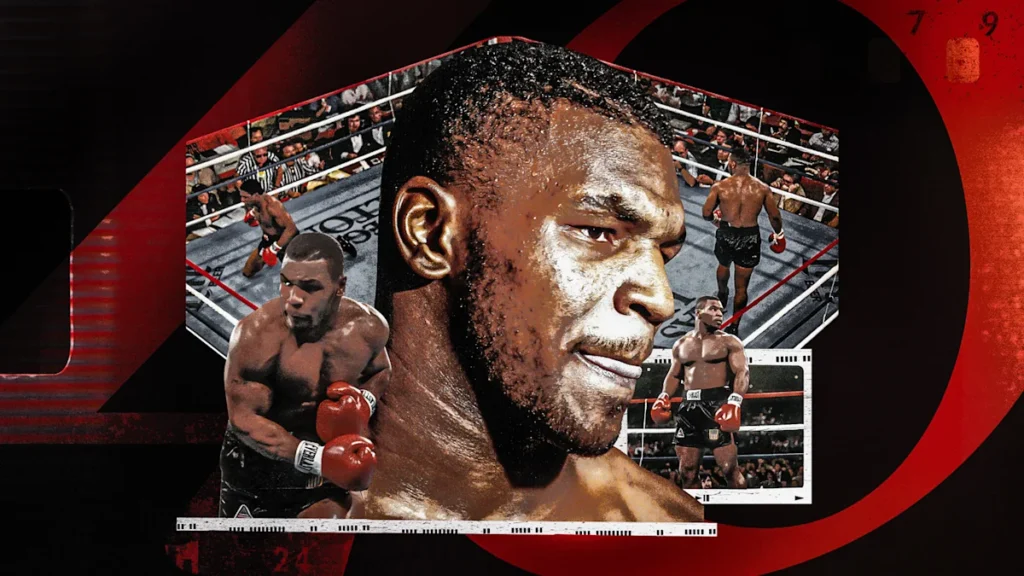

On November 22, 1986, the Las Vegas Hilton hosted a spectacle that broadcaster Larry Merchant famously described as a “coronation more than a contest.” HBO’s broadcast team, including Barry Tompkins and “Sugar” Ray Leonard, arrived in formal tuxedos, expecting a polished evening affair. Instead, they witnessed the raw, unfiltered arrival of Mike Tyson, who was just 20 years and four months old. The atmosphere was electric yet paradoxical; while the production values suggested a high-society gala, the reality inside the ring was gritty and primal, capturing the exact moment a Brooklyn prodigy prepared to shatter the sport’s most prestigious records.
Key Match Highlights & Tactical Analysis
Tyson’s entrance defied convention, wearing his trademark white towel as a shirt and iconic black trunks that drew a $5,000 fine for insubordination because challenger Trevor Berbick had also chosen black. This visual defiance underscored the psychological warfare Tyson waged before the first bell even rang. At the time, Tyson held a perfect professional record, and his reputation for devastating power had already silenced skeptics. The term “inevitability” replaced “invincibility” in the boxing world, as fans and analysts alike recognized that the 20-year-old was not just a contender but a force of nature destined to claim the WBC, WBA, and IBF heavyweight titles.
The bout against Berbick was a masterclass in controlled aggression, with Tyson securing a unanimous decision to become the youngest heavyweight champion in history. This victory was not merely a statistical milestone but a cultural shift, proving that technical finesse could be secondary to sheer kinetic dominance. Forty years later, the event remains a pivotal moment in sports history, illustrating how Tyson’s blend of youthful arrogance and lethal skill transformed the heavyweight division from a sport of endurance into a theater of shock and awe.
Source: Yahoo Sports