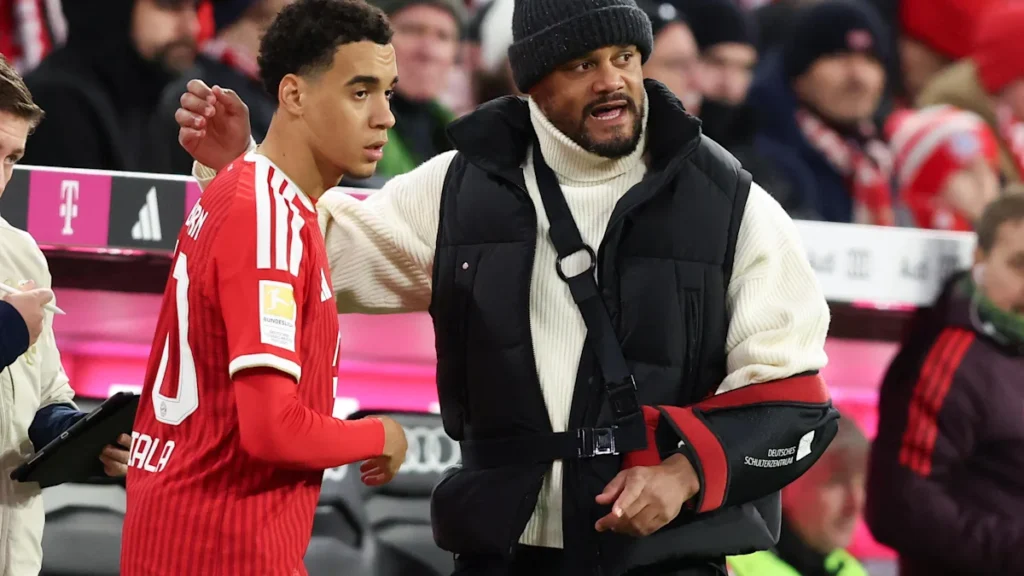

The past week has cast a shadow over Bayern Munich, transforming a routine injury recovery into a high-stakes public relations crisis centered on Jamal Musiala. The controversy ignited after a series of pointed comments from club figures, including Jan-Christian Dreesen, Uli Hoeneß, and Karl-Heinz Rummenigge, questioned the handling of the 21-year-old’s contract and availability. This unprecedented transparency from the boardroom has fractured the fanbase, forcing supporters to weigh their loyalty against the discomfort of watching club leadership publicly air grievances regarding one of their most valuable assets.
Key Match Highlights & Tactical Analysis
Critics argue that the executive team’s approach has been counterproductive, turning a private matter into a public spectacle that undermines the club’s unity. Musiala, a generational talent who recently extended his commitment to the Bavarians, is now navigating a hostile narrative that questions his dedication rather than his health. While accountability is necessary in football, the tone of the recent discourse suggests a breakdown in internal communication, leaving fans to wonder if the club’s high-pressure culture is now spilling over into toxic territory that could jeopardize the player’s long-term integration and performance.
For the majority of the global football audience, however, this episode may simply be a reminder of Bayern Munich’s distinct identity. The club has always operated with an outsized sense of entitlement and an expectation of perfection that few other organizations match. While the specific details of the Musiala situation are uncomfortable, the underlying dynamic—where leadership feels empowered to publicly critique its own players—remains a constant in Munich. The key takeaway is not that the drama is new, but that the scale of the reaction highlights just how much the club’s future now hinges on the success and stability of its young core.
Source: Yahoo Sports