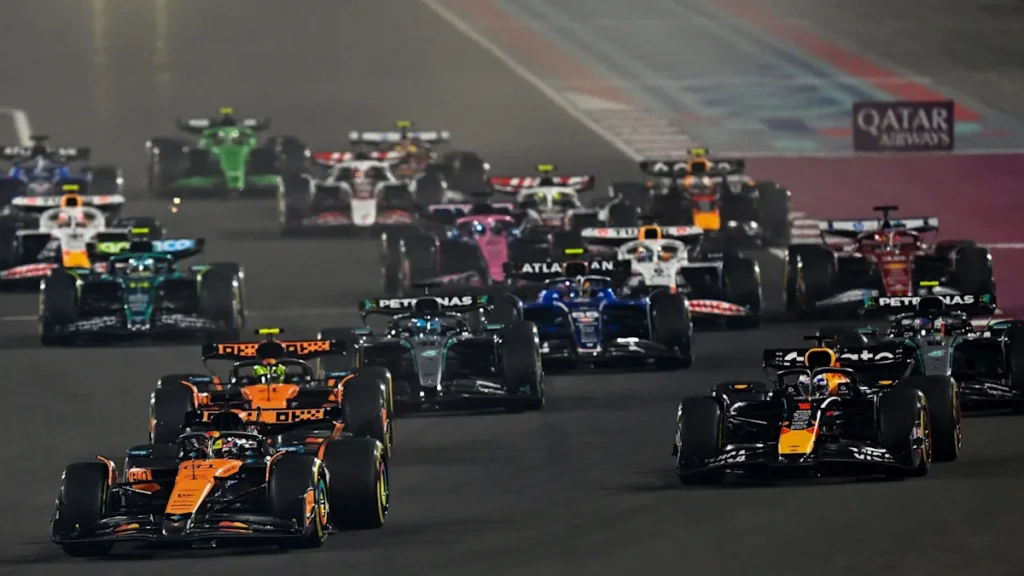

Formula 1 teams face a mandatory strategic constraint at next weekend’s Qatar Grand Prix, with drivers restricted to a maximum of 27 laps on any single set of Pirelli tyres. This regulatory intervention stems from significant concerns regarding tyre integrity at the Lusail International Circuit, a track characterized by its high-speed nature and a series of demanding, long-duration corners that place extreme thermal and mechanical stress on the compounds. The cap ensures that no single set exceeds its safe operational window, prioritizing safety over aggressive stint management.
Key Match Highlights & Tactical Analysis
The 27-lap limit fundamentally dictates race strategy, forcing all constructors to plan for a minimum of two pit stops during the 57-lap event. This mirrors the strategic landscape of last year’s Qatar Grand Prix, where the shorter 25-lap limit necessitated a two-stop approach. Crucially, this restriction is cumulative across all sessions; mileage accumulated during practice or qualifying directly reduces the available laps for the race. Consequently, teams must meticulously manage their free practice and qualifying runs to preserve tyre life for the decisive Sunday session.
Pirelli clarified that the 2026 limit is slightly higher than the previous year’s 25-lap cap due to the reduced downforce levels inherent in the new car regulations. The aerodynamic changes lower the overall load on the tyres, allowing for a marginal increase in safe mileage. However, the Lusail circuit remains one of the most challenging tracks on the calendar for rubber degradation, meaning teams will need to balance the trade-off between qualifying performance and race-day tyre availability to secure optimal results.
Source: Yahoo Sports