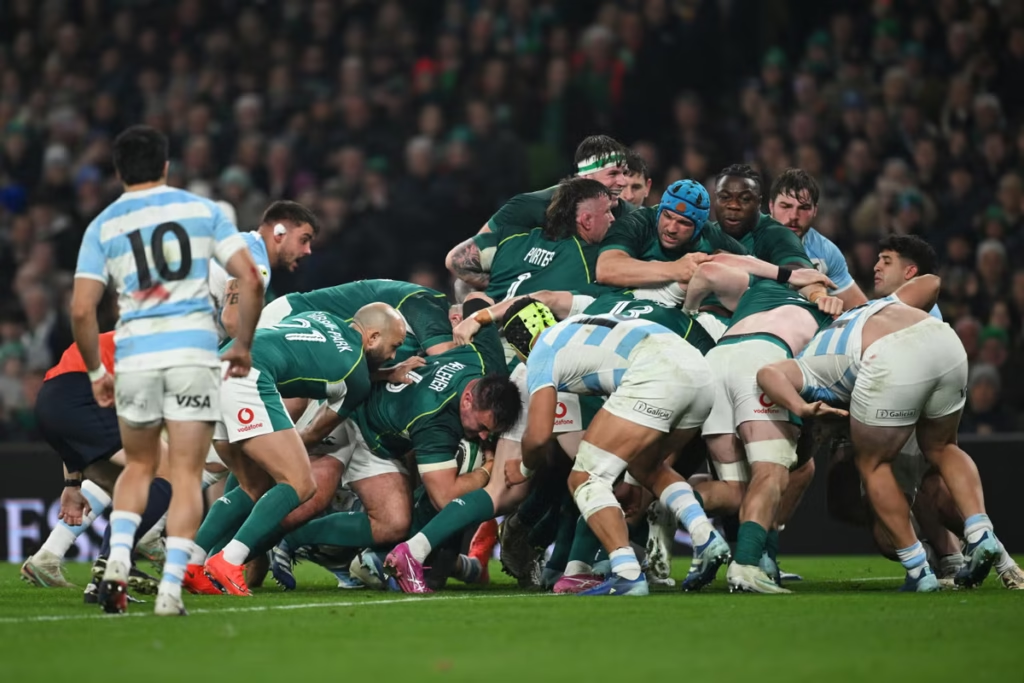

World Rugby’s recent initiative to bridge the gap between coaches and officials has highlighted a critical tactical evolution in international rugby. During a joint session at the Windsor refereeing camp, England head coach Steve Borthwick and South Africa’s Rassie Erasmus, both former lineout forwards, presented on the maul. Their insights underscore how the driving lineout has become an outsized force in the game, prompting urgent discussions on how to balance offensive dominance with defensive integrity ahead of the autumn internationals.
Why the driving lineout is reshaping international rugby and confusing defenders
The surge in maul-based attacks follows a subtle but significant law amendment implemented before the July Tests. The new rule mandates that defensive players who have moved beyond the ball must vacate the space and retreat behind the back foot of the ball carrier. This adjustment was intended to reduce defensive congestion and encourage open play, yet it has inadvertently empowered attacking teams to exploit the maul as a primary territorial and scoring weapon, creating a tactical paradox that is reshaping match dynamics.
As the Nations Championship resumes, the focus shifts to how teams adapt to this “well-intentioned crackdown” that may have backfired. The maul is no longer just a set-piece continuation but a potent offensive engine that forces defenders into difficult decisions. For fans and analysts, this trend offers a fascinating layer of strategic depth, revealing that rugby’s most controversial phase of play is evolving into a sophisticated tactical tool rather than merely a physical contest.
Source: The Independent Sport