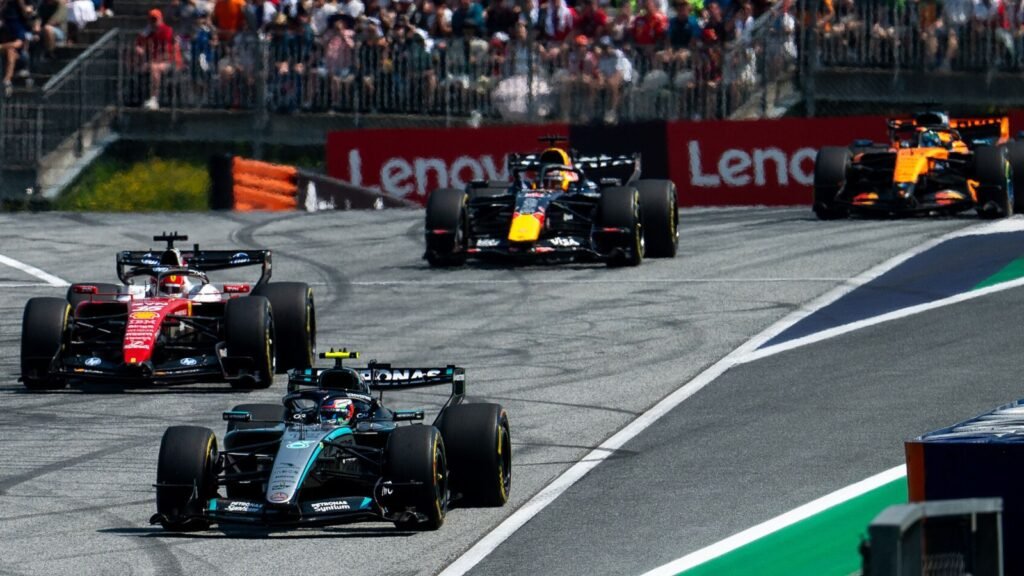

Mercedes have cemented their status as the benchmark for Formula 1’s new technical era, securing a historic double triumph with the Constructors’ Championship clinched in Brazil. This achievement follows Kimi Antonelli’s landmark victory in Mexico, where the Italian became the sport’s youngest-ever world champion. By locking down both titles with three rounds remaining, the Silver Arrows have demonstrated the sheer scale of their advantage under the 2026 regulations, effectively ending the season’s primary narrative before the final curtain.
Dominant start masks a fierce battle as rivals claw back to make 2026’s finale unforgettable.
However, the path to this dominance was far less linear than the final standings suggest. While Mercedes cruised to victories in the first six rounds, the competitive balance shifted dramatically as the chasing pack closed the gap. The latter half of the season delivered genuine suspense, with McLaren’s Lando Norris and Red Bull’s Max Verstappen each claiming three wins to keep the pressure on. Furthermore, Ferrari’s resurgence was undeniable, with Lewis Hamilton and Charles Leclerc both securing victories that highlighted the depth of talent and machinery competing at the front.
This dynamic interplay between Mercedes’ early supremacy and the subsequent resurgence of McLaren, Red Bull, and Ferrari signals a promising future for the sport. Rather than a one-team show, the 2026 campaign has featured a multi-front war for supremacy, proving that the new ruleset allows for diverse competitive strategies. As the season concludes, the data suggests that while Mercedes may hold the trophies, the intense rivalry established this year sets the stage for a thrilling and unpredictable era of competition.
Source: Sky Sports