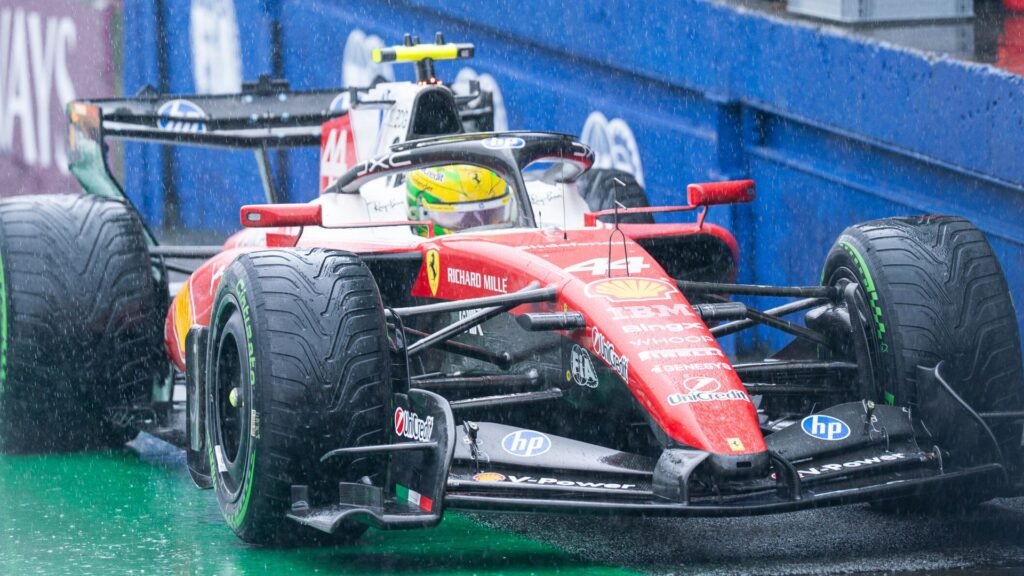

Lewis Hamilton has revealed that he deliberately overrode Ferrari’s instruction to pit during the Sao Paulo Grand Prix, citing a critical “lack of information” regarding the track conditions. As rain began to fall in the closing stages of the race, the 40-year-old chose to remain on his current tire compound, a high-risk decision that sparked immediate debate among fans and analysts. Hamilton’s decision to defy the pit wall highlights the intense pressure drivers face when real-time data conflicts with their on-track perception of grip and visibility.
Key Match Highlights & Tactical Analysis
The incident underscores the complex dynamic between driver autonomy and team strategy in modern Formula 1. While teams rely on sophisticated telemetry and weather models to dictate optimal pit windows, drivers often possess a more immediate, visceral understanding of the car’s behavior on a changing surface. By staying out, Hamilton gambled on his ability to manage the wet conditions better than a fresh set of tires would allow, a move that reflects his deep experience in managing rain-affected races. This tactical divergence offers a fascinating case study in the evolving balance of power within the cockpit.
Key takeaways from Hamilton’s comments suggest that communication clarity remains a vital component of race performance. The “lack of information” he referenced points to potential gaps in the data feed or the speed at which strategic updates were transmitted to the car. As teams continue to refine their in-race decision-making processes, incidents like this in Sao Paulo serve as a reminder that human judgment remains an indispensable variable in the high-stakes environment of Grand Prix racing.
Source: Sky News Sport