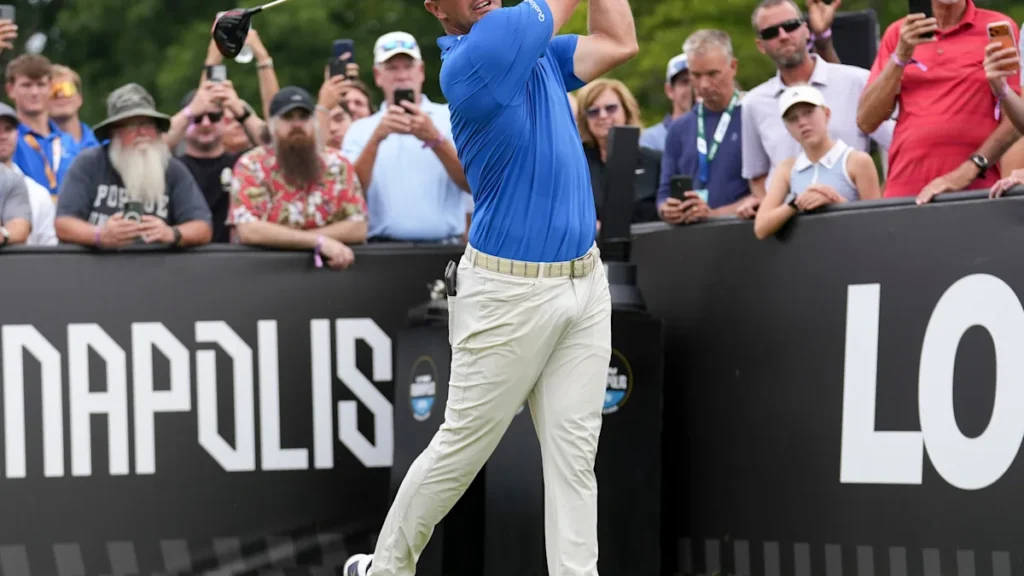

The five-year, Saudi-backed experiment designed to disrupt professional golf has officially hit a dead end. In a stunning development, LIV Golf announced it cannot secure the necessary funding to continue operations, shifting from expansion to a “value-maximizing wind-down.” Attorney Matthew Williams of Gibson Dunn confirmed to a bankruptcy court in Trenton, New Jersey, that the “LIV 2.0 plan” is abandoned. This marks the definitive end of a league that once promised to reshape the sport’s economic landscape, now forced to dismantle its infrastructure after losing critical financial backing in April.
From PGA Tour rival to wind-down: How the golf revolution crashed after losing its funding.
The collapse follows the withdrawal of support from the Public Investment Fund, which had injected over $5 billion into the venture since its 2022 launch. Despite the league attempting to retain talent by ballooning purses to $30 million per event for the 2026 season, the exodus of top-tier players accelerated once the funding dried up. Major stars including Sergio Garcia, Louis Oosthuizen, Jon Rahm, and Tyrrell Hatton began defecting, signaling a loss of confidence in the league’s long-term viability. The financial vacuum proved too large to bridge, rendering the high-stakes incentives ineffective against the uncertainty of the league’s future.
This bankruptcy filing caps a turbulent chapter in golf history, where a state-backed entity attempted to bypass traditional governing bodies and established tours. The rapid shift from a high-profile challenger to a liquidating entity highlights the fragility of sports leagues reliant on single-source, sovereign wealth funding. As executives navigate the wind-down process, the broader implications for the sport’s competitive structure remain clear: the era of aggressive, capital-heavy disruption has ended, leaving the PGA Tour as the undisputed standard-bearer once again.
Source: Yahoo Sports