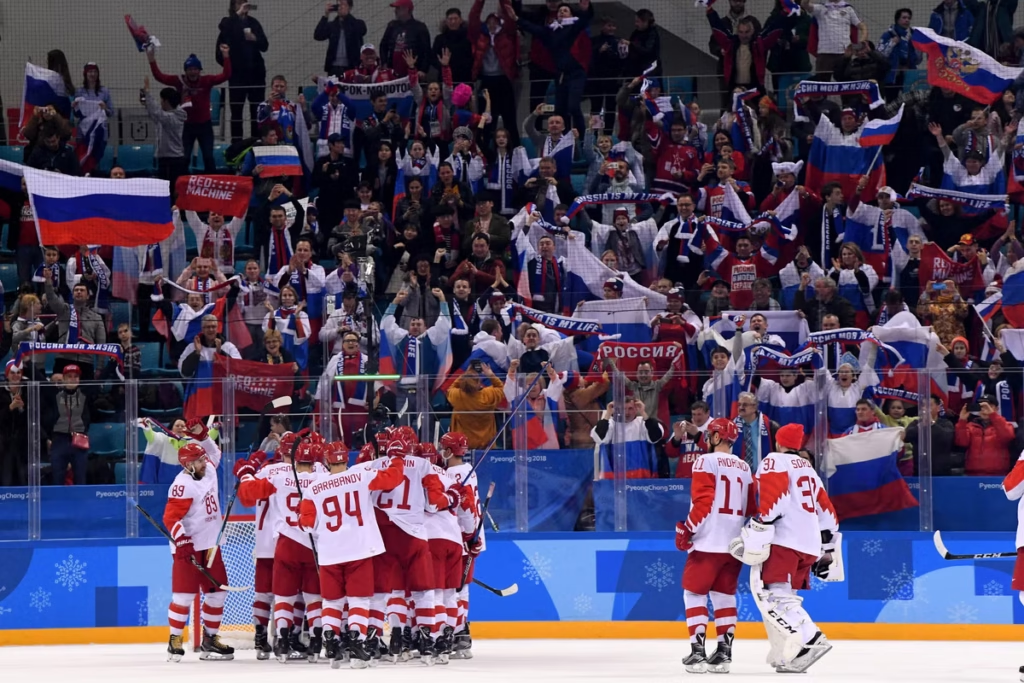

The Court of Arbitration for Sport (CAS) has issued a decisive ruling that overrules the International Ice Hockey Federation (IIHF), mandating Russia’s return to international competition for the 2026-27 season. The tribunal determined that the IIHF’s previous exclusion of Russian teams, based on safety and security concerns, lacked sufficient evidentiary support. This legal victory for the Russian Ice Hockey Federation immediately restores eligibility for all major tournaments, with the immediate flashpoint being the World Junior Championship in Canada, which commences on December 26. The decision effectively dismantles the de facto ban that had isolated Russia from the global hockey stage since 2022, forcing federations to navigate a complex landscape of legal compliance and political reality.
Key Match Highlights & Tactical Analysis
The most significant consequence of this ruling will be felt at the men’s IIHF World Championships in Germany next May, where the geopolitical stakes are highest. For the first time in two decades, Ukraine has qualified for the 16-nation tournament, creating an unavoidable and highly charged scenario where Russian and Ukrainian teams will compete under the same roof. This convergence has already prompted vocal boycott threats and calls for rebellion from various stakeholders who argue that hosting a neutral tournament in Europe while accommodating a state accused of aggression undermines the integrity of the event. The IIHF now faces the difficult task of enforcing CAS’s order while managing the diplomatic fallout and potential security risks in a host nation that remains a key NATO ally.
This ruling marks a pivotal shift in the governance of international ice hockey, highlighting the growing tension between sporting bodies and geopolitical pressures. While the legal door is now open for Russian participation, the practical implementation remains fraught with uncertainty, as national teams and fans may still refuse to engage with Russian opponents. The upcoming World Junior Championship in Canada will serve as the first real-world test of this new status quo, setting the tone for how the sport handles its most contentious relationship. As the IIHF prepares for the 2026 cycle, the organization must balance its legal obligations with the expectations of its member nations, ensuring that the path to the German World Championships does not devolve into a broader crisis for the sport.
Source: The Independent Sport