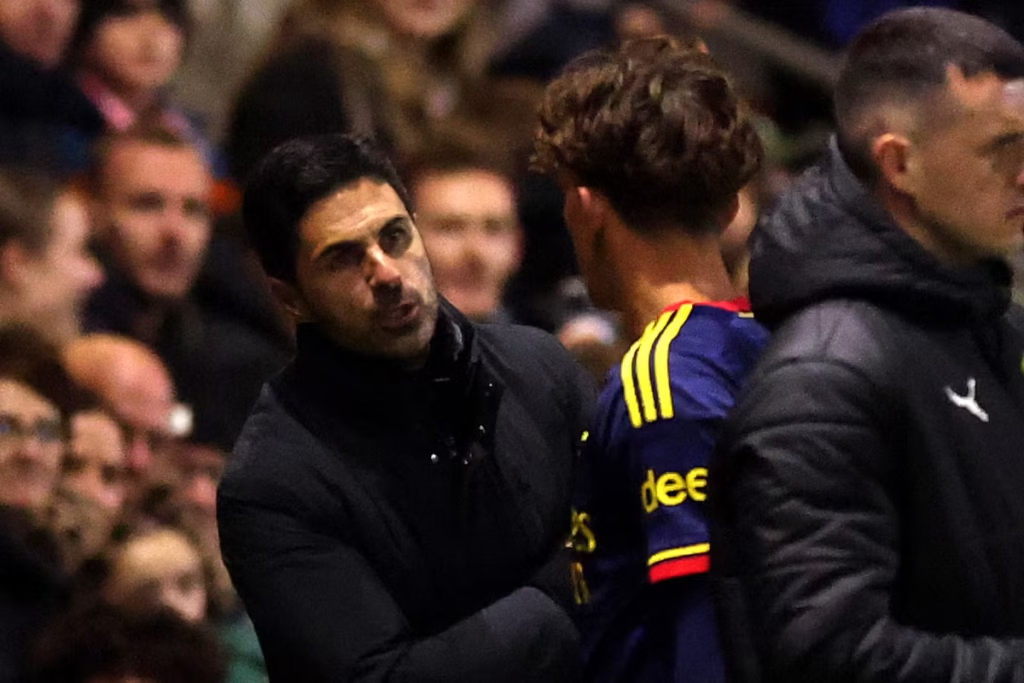

Mikel Arteta’s scathing public reaction to Max Dowman’s red card against Fleetwood has ignited a fierce debate about the treatment of teenage players in the Premier League. The 16-year-old, who is too young to legally drive, was sent off for a kick-out following a dangerous scissoring challenge from Harrison Neal. While Arteta is right to demand senior-level composure from any player entrusted with a first-team shirt, his tone suggests a lack of empathy for a player who is still navigating the emotional volatility typical of his age group.
Key Match Highlights & Tactical Analysis
The incident highlights a significant disconnect between managerial expectations and developmental reality. Dowman’s outburst, while a major blunder that resulted in a three-match suspension, was arguably a natural response to a challenge that has historically broken legs. By publicly labeling the teenager’s reaction as unacceptable without acknowledging the provocation or his youth, Arteta risks stifling the confidence of a player widely regarded as one of the sport’s most exciting talents. The “troubled teen” label is often applied dismissively, yet it ignores the fact that maturity on the pitch does not automatically align with chronological age.
This episode serves as a critical case study for clubs managing young prospects. While discipline is non-negotiable, the method of delivery matters. Arteta’s approach, which prioritizes immediate tactical order over long-term psychological development, mirrors a broader trend in elite football where the pressure to perform often overshadows the need for patient mentorship. For Arsenal to fully harness Dowman’s potential, the club must balance its demand for professional conduct with an understanding that a 16-year-old is still in the process of becoming a senior footballer, not just a junior player playing up.
Source: The Independent Sport